MagicPixel
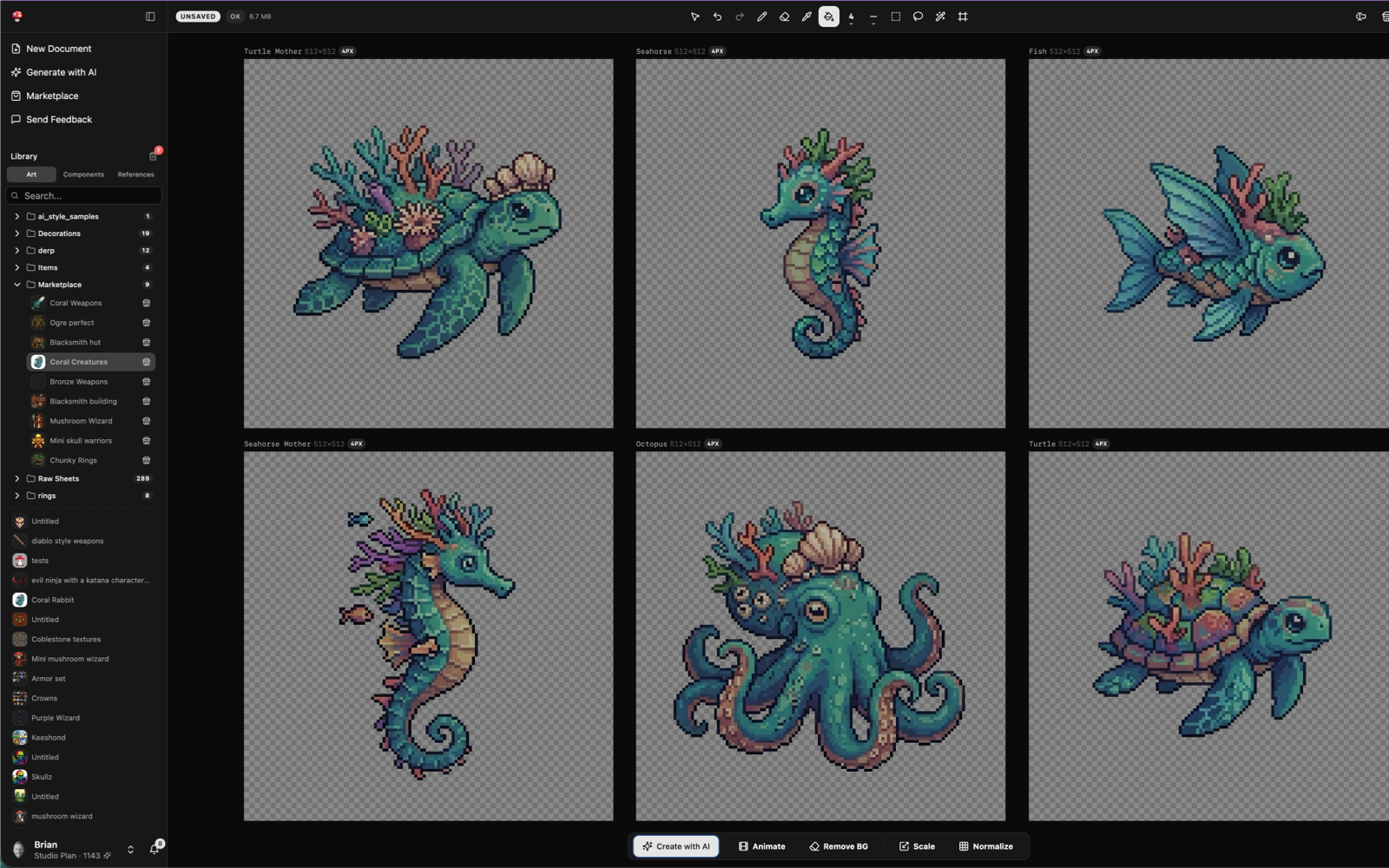
AI-powered pixel art studio built for game development. Generate consistent asset variations, manage large libraries, and sync assets directly into your game. Think Figma, purpose-built for pixel art.
Overview
After a decade shipping game assets, I watched AI image tools fall short of real production needs: clunky outputs, painful post-processing, and no sense of palettes, components, or pipelines. MagicPixel exists to close that gap and dramatically speed up game asset creation.
Problem
Asset production is one of the biggest constraints in game development. Building the King Rabbit series, the bottleneck was creating art. I lost countless hours generating consistent variations, maintaining a cohesive look, managing palettes, organizing libraries, and shoehorning files into engines. Existing tools were never built for pixel art, so every step added friction.
Approach




I built MagicPixel around a workflow I knew inside and out. After years in Sketch, Figma, Photoshop, and bespoke game pipelines, I leveraged my familiarity with asset generation tools and the exact pain points they create. The goal is simple: kill repetitive work so developers ship more game. AI asset generation produces consistent pixel art and variations that hold a unified style across a whole project. Palette quantization snaps artwork to a shared palette in a few clicks. Components bring design-system thinking to pixel art, so you build once and reuse everywhere. A CLI plus npm package push assets straight into game projects, no manual exporting.
Outcomes
MagicPixel turns the slowest parts of pixel art production into streamlined workflows: faster asset creation, less export and organization busywork, more consistent visuals, easy skins and variants, and tight asset-to-engine integration. Developers spend more time building games and less time wrangling files.
Gallery